URL: /guides/energy
---
title: Energy in Electricity Networks
icon: "bolt"
sidebarTitle: Energy
---
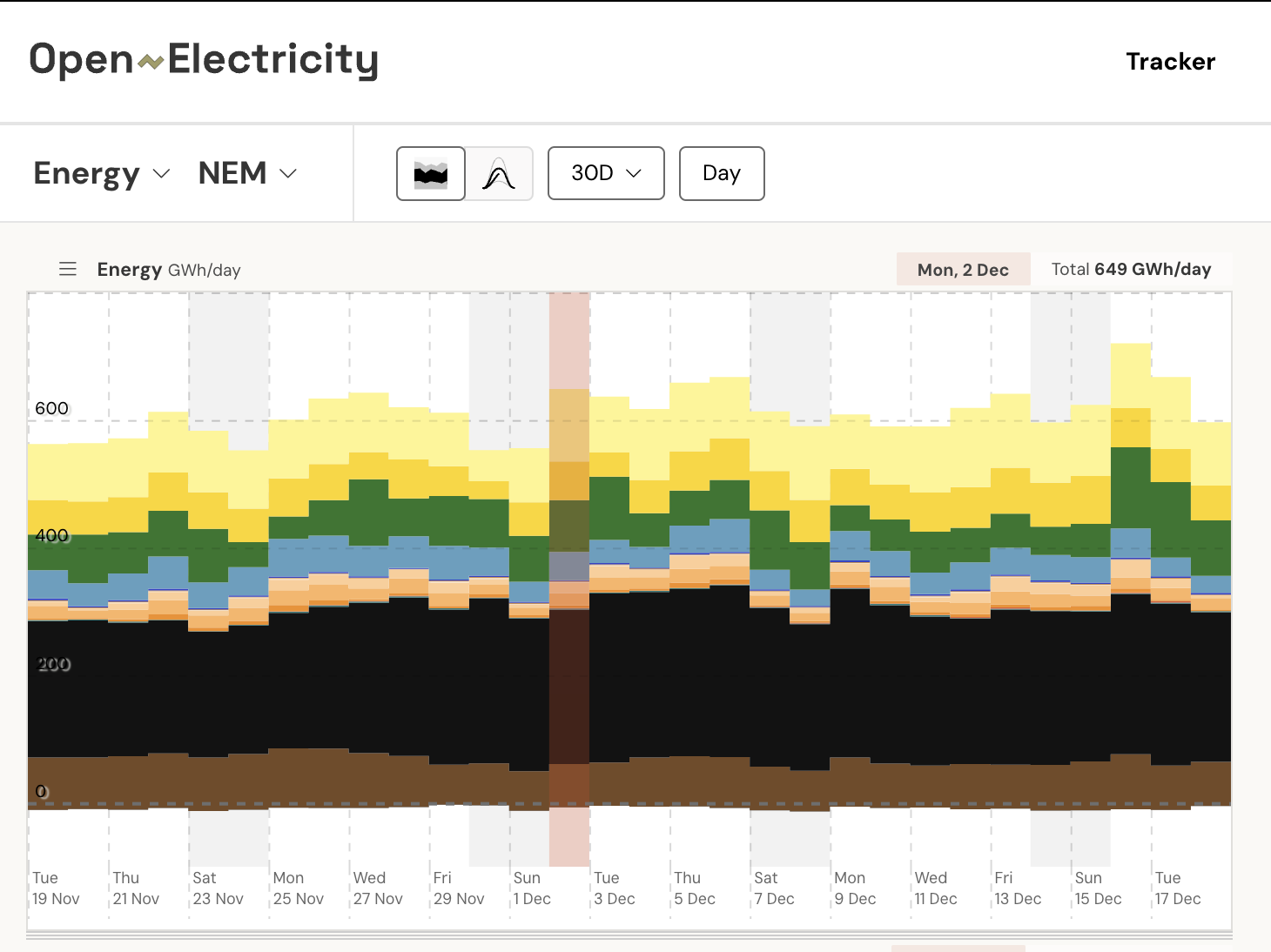 Energy in the context of electricity networks refers to the total amount of electrical power consumed or generated over a specific period. It is typically measured in megawatt-hours (`MWh`) at facility scale and gigawatt-hours (`GWh`) at network and grid scale. Unlike power, which is an instantaneous measurement, energy accounts for the duration over which power is used or produced.
## Definition of Energy
Energy is the integral of power over time, representing the area under the power curve on a graph of power versus time. In simpler terms, it is the accumulation of power usage or generation over a given time interval. For example, if a device uses 1 kilowatt (kW) of power continuously for one hour, it consumes 1 kilowatt-hour (kWh) of energy.
## Difference Between Energy and Power
- **Power**: Power is the rate at which energy is generated or consumed at any given moment. It is an instantaneous measurement and is typically expressed in watts (`W`) or megawatts (`MW`).
- **Energy**: Energy is the total amount of power used or generated over a period of time. It is a cumulative measurement and is expressed in kilowatt-hours (`kWh`) or megawatt-hours (`MWh`).
In essence, power is about the rate of energy flow, while energy is about the total amount of energy transferred over time.
## Energy Calculation in Open Electricity
Open Electricity calculates energy for each interval by averaging the power generated during that interval and the previous interval. This method provides a more accurate representation of energy usage or generation over time.
### Calculation Method
The energy for a given interval is calculated using the following formula:
$$
E_i = \frac{P_i + P_{i-1}}{2} \times \Delta t
$$
Where:
$$E_i: \text{Energy during the interval (in MWh).} \\[8pt]$$
$$P_i: \text{Power during the current interval } i \text{ (in MW).} \\[8pt]$$
$$P_{i-1}: \text{Power during the previous interval } i-1 \text{ (in MW).} \\[8pt]$$
$$\Delta t: \text{Duration of the interval in hours (e.g., for 5 minutes, } \Delta t = \frac{1}{12} \text{).} \\[8pt]$$
### Calculation Example
Calculate the energy for a 5-minute interval where the power during the current interval is 60 `MW` and the power during the previous interval is 50 `MW`.
$$ P_i = 60 \, \text{MW} \, (\text{power during the current interval}) $$
$$ P_{i-1} = 50 \, \text{MW} \, (\text{power during the previous interval}) $$
$$ \Delta t = \frac{1}{12} \, \text{hours} \, (\text{5-minute interval}) $$
**Step 1: Average the Power Values**
$$\text{Average Power} = \frac{P_i + P_{i-1}}{2} = \frac{60 + 50}{2} = 55 \, \text{MW}$$
**Step 2: Divide by Interval Duration**
$$\text{Energy} = \text{Average Power} \times \Delta t = 55 \, \text{MW} \times \frac{1}{12} \, \text{hours} = 4.583 \, \text{MWh}$$
We get a result that is 4.583 MWh, the energy in `MWh` for that 5-minute interval.
Energy in the context of electricity networks refers to the total amount of electrical power consumed or generated over a specific period. It is typically measured in megawatt-hours (`MWh`) at facility scale and gigawatt-hours (`GWh`) at network and grid scale. Unlike power, which is an instantaneous measurement, energy accounts for the duration over which power is used or produced.
## Definition of Energy
Energy is the integral of power over time, representing the area under the power curve on a graph of power versus time. In simpler terms, it is the accumulation of power usage or generation over a given time interval. For example, if a device uses 1 kilowatt (kW) of power continuously for one hour, it consumes 1 kilowatt-hour (kWh) of energy.
## Difference Between Energy and Power
- **Power**: Power is the rate at which energy is generated or consumed at any given moment. It is an instantaneous measurement and is typically expressed in watts (`W`) or megawatts (`MW`).
- **Energy**: Energy is the total amount of power used or generated over a period of time. It is a cumulative measurement and is expressed in kilowatt-hours (`kWh`) or megawatt-hours (`MWh`).
In essence, power is about the rate of energy flow, while energy is about the total amount of energy transferred over time.
## Energy Calculation in Open Electricity
Open Electricity calculates energy for each interval by averaging the power generated during that interval and the previous interval. This method provides a more accurate representation of energy usage or generation over time.
### Calculation Method
The energy for a given interval is calculated using the following formula:
$$
E_i = \frac{P_i + P_{i-1}}{2} \times \Delta t
$$
Where:
$$E_i: \text{Energy during the interval (in MWh).} \\[8pt]$$
$$P_i: \text{Power during the current interval } i \text{ (in MW).} \\[8pt]$$
$$P_{i-1}: \text{Power during the previous interval } i-1 \text{ (in MW).} \\[8pt]$$
$$\Delta t: \text{Duration of the interval in hours (e.g., for 5 minutes, } \Delta t = \frac{1}{12} \text{).} \\[8pt]$$
### Calculation Example
Calculate the energy for a 5-minute interval where the power during the current interval is 60 `MW` and the power during the previous interval is 50 `MW`.
$$ P_i = 60 \, \text{MW} \, (\text{power during the current interval}) $$
$$ P_{i-1} = 50 \, \text{MW} \, (\text{power during the previous interval}) $$
$$ \Delta t = \frac{1}{12} \, \text{hours} \, (\text{5-minute interval}) $$
**Step 1: Average the Power Values**
$$\text{Average Power} = \frac{P_i + P_{i-1}}{2} = \frac{60 + 50}{2} = 55 \, \text{MW}$$
**Step 2: Divide by Interval Duration**
$$\text{Energy} = \text{Average Power} \times \Delta t = 55 \, \text{MW} \times \frac{1}{12} \, \text{hours} = 4.583 \, \text{MWh}$$
We get a result that is 4.583 MWh, the energy in `MWh` for that 5-minute interval.